Overview
Course Content
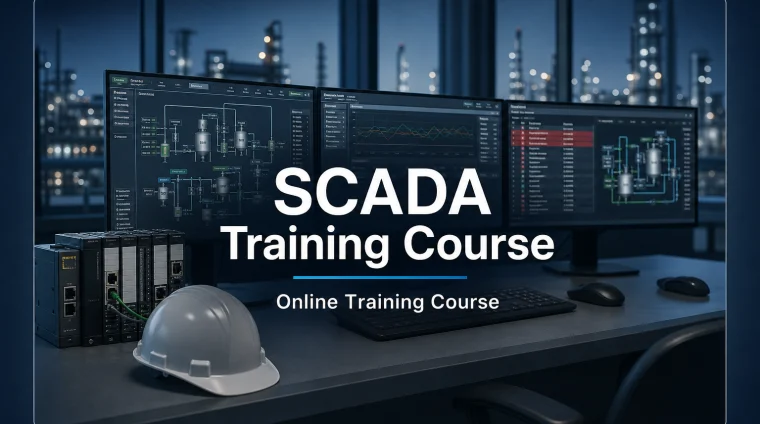
This Satoms SCADA Training Course gives technicians and technical learners a clear, practical foundation in how SCADA systems are built, operated, monitored, and maintained. You will learn how SCADA fits into industrial automation, how PLCs and RTUs connect to field devices, how data moves through communications networks, and how operators use HMI screens, alarms, trends, and commands to support safe process control.
Verified Satoms Course Rating
SCADA Training Course
Based on 52 learner reviews
Course Level: Beginner
Course information last reviewed: June 2026
By completing this course, learners will be better prepared to read SCADA screens, understand common faults, and communicate more confidently with automation, maintenance, and operations teams.
The course is vendor-aware without being locked to one platform, so the principles apply to environments such as Ignition, Wonderware, Siemens, and other industrial SCADA systems. It is designed to help you build credible SCADA fundamentals before working around live systems, supporting maintenance tasks, or progressing to platform-specific configuration training.
What You Will Learn
- How Supervisory Control and Data Acquisition systems monitor and control industrial processes
- The practical roles of PLCs, RTUs, sensors, actuators, HMIs, SCADA servers, historians, and communications links
- How SCADA tags, scaling, alarms, trends, and events are used in daily operations
- How operator commands, interlocks, permissives, and control authority typically work between SCADA and PLC logic
- How common SCADA communications and remote site connections are structured
- How to recognize SCADA faults, data issues, communication failures, and alarm problems
- How cybersecurity awareness, user access, and safe operating practices apply to SCADA systems
Who This Course Is For
- Electrical, instrumentation, maintenance, and automation technicians
- Control room support personnel and technical operators
- Apprentices and tradespeople who want practical SCADA fundamentals
- Technical people moving into industrial automation
- Engineers or supervisors who need clear SCADA awareness
Course Benefits
- Build a practical foundation for working around SCADA systems in industrial sites
- Improve confidence when discussing PLCs, communications, tags, alarms, trends, and remote monitoring
- Understand what you are seeing on HMI screens and in control panels
- Support safer fault finding by learning the difference between SCADA display issues and PLC control logic issues
- Prepare for further training on platforms such as Ignition, Wonderware, Siemens, and other SCADA software
- Complete structured online learning remotely at a technician-friendly pace
Assessment and Certificate
The final assessment checks practical understanding of SCADA fundamentals, including system architecture, PLC and RTU roles, field I/O, tags, scaling, alarms, trends, communications, remote operation, cybersecurity awareness, HMI workflow, and basic troubleshooting.
Pass mark: 80%
Requirements
- Basic technical literacy is recommended
- Awareness of electrical controls, instrumentation, PLCs, or industrial equipment is helpful but not essential
- No prior SCADA programming experience is required
- A computer, tablet, or suitable device with internet access is required for online study
- A willingness to learn industrial automation concepts using practical examples
Start Building Practical SCADA Confidence
If you need a clear, technician-focused introduction to SCADA systems, this course provides a structured way to understand the equipment, terminology, workflows, and troubleshooting concepts used across industrial automation environments. Enrol today and build the SCADA knowledge needed to communicate more confidently, work more safely, and prepare for platform-specific SCADA training.
Frequently Asked Questions
What is the SCADA Training Course about?
This course teaches the fundamentals of Supervisory Control and Data Acquisition systems, including how SCADA monitors equipment, collects field data, displays HMI information, manages alarms, and supports industrial control operations.
Who is the Satoms SCADA Training Course for?
It is designed for technicians, operators, maintenance staff, electricians, instrumentation personnel, engineering trainees, and technical learners who want a practical understanding of SCADA systems used in industry.
Do I need previous SCADA experience to enroll?
No previous SCADA programming experience is required. Basic knowledge of electrical controls, instrumentation, automation, or industrial equipment will help, but the course explains key SCADA concepts in a clear, beginner-friendly way.
What practical skills will I gain from this SCADA course?
You will learn how PLCs, RTUs, field devices, communications, HMIs, alarms, trends, and remote monitoring work together, so you can understand real SCADA systems with greater confidence.
Does the course cover PLCs, RTUs, HMIs, and communications?
Yes. The course explains how PLCs and RTUs connect to field equipment, how SCADA data moves through industrial networks, how HMI screens support operators, and how communication issues can affect system visibility.
Is this SCADA training professionally developed?
Yes. Satoms courses are structured using a technical training approach with practical explanations, accurate industrial terminology, and workplace-style examples relevant to automation and control environments.
Will I receive a certificate after completing the course?
Yes. After meeting the completion requirements, you can receive a Satoms certificate that demonstrates your professional development and understanding of SCADA fundamentals.
Does Satoms offer a money-back guarantee?
Satoms provides a money-back guarantee for added confidence when enrolling in training. This helps students choose the course with less risk while still receiving professional online training and support.
Related Courses
Curriculum
- 5 Sections
- 12 Lessons
- Lifetime
Expand all sectionsCollapse all sections
- Module 1: SCADA Foundations and System Roles3
- Module 2: Data, Logic, and Operator Visibility3
- Module 3: Communications, Remote Operation, and Security3
- Module 4: Practical Skills, Troubleshooting, and Wrap-Up3
- Module 5: SCADA Assessment1