20% off
VSAT Satellite Course Bundle
Choose 2 to 5 courses.
Professional Online Training
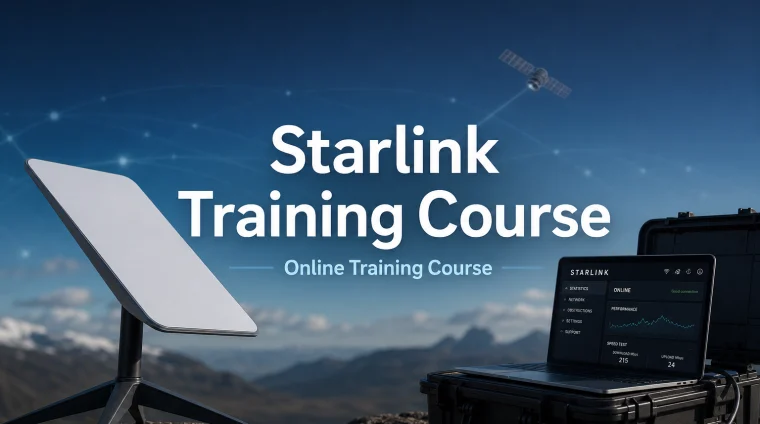
Learn how Starlink satellite broadband works and develop a practical approach to terminal placement, network connectivity, performance checks, and fault diagnosis.
Written by industry experts with over 20 years of practical experience, this excellent-quality Satoms training builds useful knowledge and confidence and offers a Satoms training certificate after successful completion.
Start Your Training Today
Enroll and begin developing Starlink skills online at your own pace.
Satoms provides excellent-quality, practical online training designed to make technical subjects clear and useful. Written by industry experts with over 20 years of practical experience, this course connects satellite broadband principles with the decisions involved in installation, networking, and support.
Clear online lessons let you work through the material at your own pace. As you build a more systematic understanding of Starlink systems, you can approach technical discussions and troubleshooting with greater confidence. Real course reviews are displayed separately on this page so you can consider learner feedback before enrolling.
This intermediate-level course is for people who need a practical understanding of Starlink in technical or operational settings, including:
Knowing what to check before and after an installation helps you make more informed placement and connection decisions. A structured diagnostic approach can help you distinguish terminal and satellite-link concerns from local Wi-Fi, routing, cabling, or device problems, reducing guesswork when connectivity is disrupted.
You will also be better equipped to describe symptoms, operating considerations, and technical findings to colleagues, customers, or support teams. These skills are relevant wherever satellite broadband supports work beyond conventional fixed-network coverage.
After successfully completing the course requirements, you will receive a Satoms training certificate as a record of your professional development. This is independent Satoms training, not an official SpaceX or Starlink certification program.
Basic familiarity with networking, satellite communications, or IT infrastructure will help you get the most from this intermediate course. An understanding of IP addressing, routing, wireless connectivity, RF principles, and latency is useful; prior field installation experience is not mandatory. You will need an internet-connected device to access and complete the online training.
It is a 100% online, self-paced Satoms course covering Starlink satellite broadband systems, installation planning, networking, and troubleshooting.
The course is designed for technicians, installers, IT personnel, maritime teams, remote communications workers, and others who need practical Starlink knowledge.
You will learn how Starlink’s LEO network works, how to install and optimize user terminals, and how to troubleshoot hardware, networking, alignment, and performance issues.
Yes. Satoms issues a Starlink training certificate upon successful completion, but it is independent training and not an official SpaceX or Starlink certification program.
The course is designed for learners with basic to intermediate networking, satellite communications, or IT infrastructure knowledge; field installation experience is helpful but not mandatory.
Choose 2 to 5 courses.


Not a member yet? Create an account
Already a member? Log In