Overview
Course Content
Professional Online Training
Build Practical Confidence in Digital Radio Systems
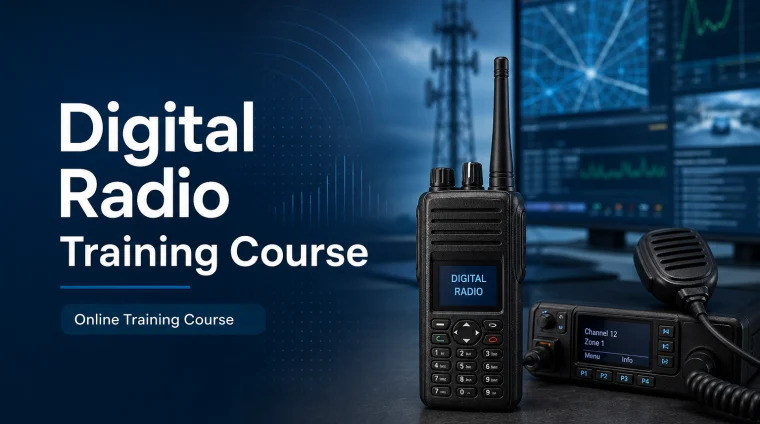
Develop the practical digital radio knowledge needed to understand, evaluate, and troubleshoot DMR, TETRA, P25, and NXDN communications systems.
This excellent-quality training is written by industry experts with over 20 years of practical experience and leads to a Satoms training certificate after successful completion.
Start Your Training Today
Enroll in the Digital Radio Training Course and begin strengthening your technical knowledge at your own pace.
Verified Satoms Course Rating
Digital Radio Training Course
Based on 1,289 learner reviews
Course Level: Beginner to Intermediate
Course information last reviewed: August 2026
What You Will Learn
Build a clearer understanding of the technologies, measurements, and troubleshooting decisions involved in modern digital radio communications.
- Explain how frequency, channel bandwidth, and modulation affect digital radio operation.
- Recognize the principal characteristics of DMR, TETRA, P25, and NXDN systems.
- Compare TDMA and FDMA access methods used by different radio technologies.
- Describe the roles of control channels, talkgroups, and trunked radio operation.
- Differentiate NXDN conventional operation from Type-C and Type-D trunking configurations.
- Interpret RSSI, bit error rate, registration status, coverage consistency, and received audio.
- Distinguish between coverage, interference, configuration, equipment, and network faults.
- Apply a structured process to confirm faults and collect useful technical information.
Why Train with Satoms
Satoms provides excellent-quality, practical online training designed to build useful knowledge and confidence. This intermediate course connects essential digital radio concepts with the measurements, system behavior, and troubleshooting decisions encountered in technical environments.
The training is written by industry experts with over 20 years of practical experience. Clear explanations help you understand what radio measurements indicate, how common performance problems develop, and which factors should be considered during a fault investigation.
The straightforward online learning experience allows you to study at your own pace and revisit important topics when needed. Real course reviews are displayed separately on this page, allowing you to consider genuine learner feedback before enrolling.
Who This Course Is For
This course is suitable for learners with some familiarity with communications technology who want to improve their understanding of digital radio systems and fault identification.
- Telecommunications and radio communications technicians.
- Radio installers, maintainers, and field support personnel.
- Technical teams supporting coverage, configuration, or service reliability.
- Existing Satoms students expanding their communications knowledge.
- Learners preparing to work with DMR, TETRA, P25, or NXDN systems.
Course Benefits
The knowledge developed through this course can help you approach digital radio issues with a more organized, technically informed mindset.
- Relate signal readings and service conditions to possible coverage problems.
- Recognize how coverage, multipath, interference, and equipment issues can affect bit error rate.
- Separate audio and accessory problems from RF, configuration, or network faults.
- Use registration status and system behavior as evidence during fault investigation.
- Reduce guesswork by evaluating measurements and symptoms in a logical sequence.
- Communicate observations, fault reports, and troubleshooting findings more clearly.
Training Certificate on Completion
After successfully completing the course requirements, you will receive a Satoms training certificate. It provides a clear record of your course completion and recognizes the knowledge developed through your training.
Completion involves working through the online learning material and satisfying the stated course requirements.
Course Requirements
There are no listed formal entry requirements. As this is intermediate-level training, basic familiarity with radio communications or telecommunications concepts will help you gain the most from the course.
- An internet-connected device suitable for accessing online training.
- A willingness to work through technical concepts and troubleshooting considerations.
- Sufficient time to complete the course requirements at your own pace.
Frequently Asked Questions
What will I learn in the Digital Radio Training Course?
You will learn how to understand, evaluate, and troubleshoot DMR, TETRA, P25, and NXDN systems, including radio measurements, access methods, trunking, coverage, interference, and fault identification.
Who is this digital radio course for?
It is suitable for learners familiar with communications technology, including telecommunications and radio technicians, installers, maintainers, field support personnel, technical teams, and learners preparing to work with DMR, TETRA, P25, or NXDN systems.
Are there any entry requirements for this course?
There are no listed formal entry requirements. Basic familiarity with radio communications or telecommunications concepts is recommended because the course is intermediate level.
Will I receive a certificate after completing the course?
Yes. After successfully completing the course requirements, you will receive a Satoms training certificate recording your course completion.
Related Courses
Curriculum
- 8 Sections
- 42 Lessons
- Lifetime
Expand all sectionsCollapse all sections
- Module 1: Digital Radio Overiew11
- Module 2: Digital Radio12
- Module 3: Modulation5
- Module 4: NXDN Overview4
- Module 5: TETRA Overview2
- Module 6: P25 Overview3
- Module 7: DMR Overview4
- Module 8: Course Overview1