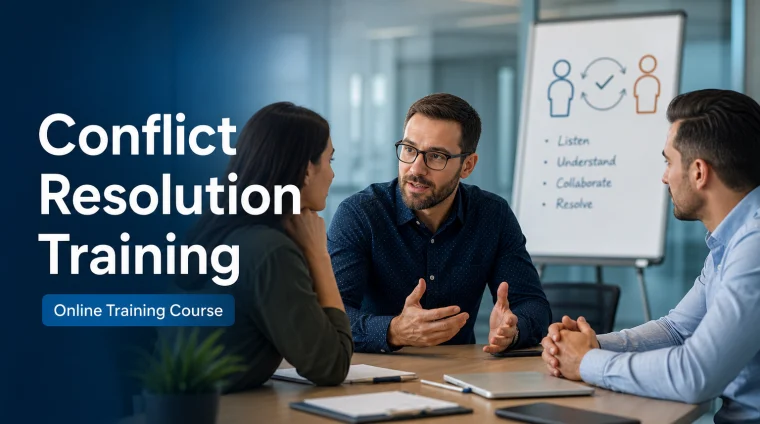
Build the confidence to manage workplace disagreements constructively. This practical online conflict resolution course equips you to recognise conflict dynamics, communicate under pressure, negotiate workable solutions and identify when safety, misconduct or reporting requirements make informal resolution inappropriate.
Verified Satoms Course Rating
☆★☆★☆★☆★☆★
4.6 out of 5
Based on 344 learner reviews
Course Level: Beginner
Develop Practical Conflict Resolution Skills
Learn a structured, safety-aware approach to handling difficult conversations in workplace and technical environments. Realistic scenarios cover technical incidents, code reviews, maintenance handovers, competing priorities and change-control decisions.
Learning Outcomes
By the end of the course, you will be able to:
Identify common causes, stages and warning signs of workplace conflict.
Separate facts, assumptions, interests and emotional responses when assessing a disagreement.
Use active listening, neutral language and focused questions to reduce tension.
Prepare and conduct a difficult conversation while maintaining professional boundaries.
Apply appropriate negotiation, problem-solving, mediation and facilitation techniques.
Agree clear actions, responsibilities, deadlines and follow-up arrangements.
Recognize when conflict requires formal reporting, safeguarding action or escalation.
Practical Benefits
Handle disagreements with greater confidence and consistency.
Reduce misunderstandings before they disrupt teamwork or operational delivery.
Use adaptable scripts to open discussions, clarify impact and confirm agreements.
Make safer decisions about informal resolution and formal escalation.
Protect working relationships while addressing performance, conduct and process concerns.
Know When Informal Resolution Is Inappropriate
A practical decision framework helps you choose a proportionate response. You will learn to prioritise immediate safety, follow required reporting routes for harassment, discrimination, safeguarding concerns or serious misconduct, and avoid promising secrecy where disclosure is required. Informal resolution should be used only when participation is safe, voluntary and permitted.
Who Should Take This Course?
This training is suitable for managers, supervisors, team leaders, HR professionals, engineers, IT and operations teams, customer service staff, educators, healthcare workers and anyone responsible for productive workplace relationships.
Flexible Online Training
100% online with immediate access
Self-paced study with lifetime course access
Practical exercises, conversation scripts and workplace scenarios
Clear, accessible lessons with instructor support
Certificate on successful completion
60-day money-back guarantee
Start today and develop a practical, professional approach to resolving conflict, protecting working relationships and escalating concerns appropriately.
Reviews from Google
What our learners say
IAIdris Abubakar4 September 2026Google
★★★★★
Satoms provides great training and support for Starlink installation in Nigeria. The team is professional and helpful. Highly recommended for anyone looking to become…Read full review
Satoms provides great training and support for Starlink installation in Nigeria. The team is professional and helpful. Highly recommended for anyone looking to become a certified Starlink reseller/installer.
GGGeorge Gates1 December 2025Google
★★★★★
This course was well put together and easy to follow. I would recommend it for any IT network staff. Great support for veterans
NANana Appiah25 February 2025Google
★★★★★
I was enrolled on the complimentary LTE Fundamentals Training Course, good course completed the LTE Fundamtals test passed. The information on LTE was clear…Read full review
I was enrolled on the complimentary LTE Fundamentals Training Course, good course completed the LTE Fundamtals test passed. The information on LTE was clear ans very layout.
SLStanley Lim6 February 2025Google
★★★★★
The contents of courses are comprehensive and detailed, equipping individuals with the skills necessary for their profession.
KBKirk Brotherton1 February 2025Google
★★★★★
I’ve found SATOMS very easy to use thus far - having a flexible timeframe for completion has allowed me to work on my VSAT…Read full review
I’ve found SATOMS very easy to use thus far - having a flexible timeframe for completion has allowed me to work on my VSAT Course when time permits, which works great for me as I work 9 to 5. Looking forward to completing my course and becoming qualified in my chosen field(s). Thanks SATOMS!
ABAugustin Bernard16 January 2025Google
★★★★★
Personal Experience: As someone who has completed the Fundamentals of LTE Technology training, I found the course to be incredibly informative and engaging. The…Read full review
Personal Experience: As someone who has completed the Fundamentals of LTE Technology training, I found the course to be incredibly informative and engaging. The content was straightforward and easy to understand, making it accessible for beginners while still providing valuable insights for more experienced learners. Overall, the training provided a comprehensive overview of LTE's purpose, historical context, and its pivotal role in modern telecommunications. It equipped me with the knowledge and skills needed to appreciate the significance of LTE and its impact on the industry. Personal Experience: As someone who has completed the Fundamentals of LTE Technology training, I found the course to be incredibly informative and engaging. The content was straightforward and easy to understand, making it accessible for beginners while still providing valuable insights for more experienced learners. Overall, the training provided a comprehensive overview of LTE's purpose, historical context, and its pivotal role in modern telecommunications. It equipped me with the knowledge and skills needed to appreciate the significance of LTE and its impact on the industry. Additionally, the training has prepared me for career advancements by enhancing my understanding of the technology and its applications, making me more competitive in the job market.
Selected recent Google reviews, displayed newest first.
What will I learn in the Conflict Resolution Training course?
You will learn to identify workplace conflict, use active listening and neutral language, conduct difficult conversations, apply negotiation and mediation techniques, agree clear actions, and recognise when formal escalation is required.
When is informal conflict resolution inappropriate?
Informal resolution is inappropriate when immediate safety, harassment, discrimination, safeguarding concerns, serious misconduct or required reporting routes are involved. It should be used only when participation is safe, voluntary and permitted.
Who should take this conflict resolution course?
The course is suitable for managers, supervisors, team leaders, HR professionals, engineers, IT and operations teams, customer service staff, educators, healthcare workers and others responsible for productive workplace relationships.
How is the Conflict Resolution Training delivered?
It is 100% online with immediate access and self-paced study. The training includes practical exercises, conversation scripts, workplace scenarios, instructor support and a certificate on successful completion.
Build practical confidence to recognize workplace injuries and medical emergencies, protect the scene, call for professional help, and provide appropriate initial assistance. This beginner-friendly Workplace...
This Satoms Change Management Training course gives learners a clear, practical framework for managing organizational change in a controlled, people-focused, and compliant way. It is...